
Schedule Washmart Doorstep Pickup & Save Time
German-grade cleaning, free home pickup & express delivery from 400+ stores across 125+ cities in 28 states and 2 countries.
Understand the differences, choose the right method for your wardrobe and avoid ironing mistakes that can damage your clothes.
A steam iron combines a heated soleplate with steam, while a dry iron uses a heated soleplate without producing steam. When comparing steam iron vs dry iron, the better choice depends on your garments, their care labels and the amount of ironing you do.
Steam can help tackle stubborn wrinkles on suitable fabrics. A dry iron offers straightforward pressing without a water tank to fill or maintain. Both can produce a neat finish when used correctly. domesticappliances.philips.co.in
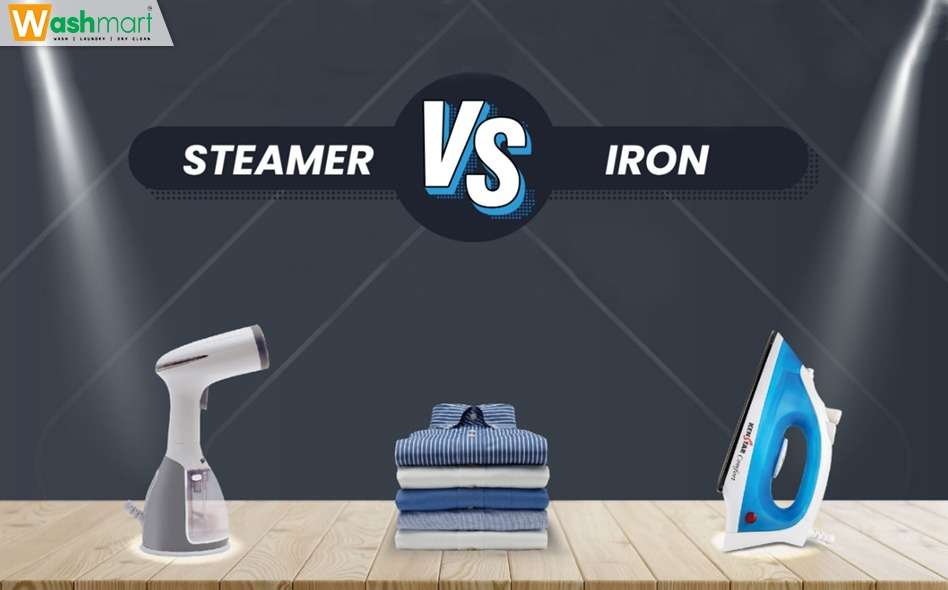
One distinction matters before going further: a steam iron is different from a garment steamer. A steam iron still presses clothes with a heated soleplate, so it can create creases and can also damage fabric if used incorrectly.
Steam Iron vs Dry Iron: What Is the Difference?
The main difference is built in steam production. Both appliances apply heat through a soleplate, but a steam iron adds moisture through steam outlets.
Feature | Steam iron | Dry iron |
|---|---|---|
Main action | Heated soleplate with optional steam | Heated soleplate without generated steam |
Water reservoir | Used for steam production | Not required |
Controls | Temperature and steam controls, depending on model | Usually temperature control |
Stubborn wrinkles | Steam can assist removal on suitable fabrics | May require additional work |
Maintenance | Soleplate care and water system maintenance | Soleplate care, without a steam system |
Dry pressing | Available on models with a dry setting | Standard function |
These differences describe appliance categories. Individual models vary in weight, controls and features, so check the manual rather than assuming every steam iron works the same way. domesticappliances.philips.co.in
What Is a Steam Iron?
A steam iron has a heated soleplate and a water reservoir. When the appliance operates in an appropriate steam setting, steam passes through openings in the soleplate.
Depending on the model, you may have continuous steam, a short steam boost, a water spray or a dry ironing setting.
Steam is useful when wrinkles are difficult to remove with pressing alone. Philips explains that steam can improve crease removal on suitable fabrics, alongside the correct temperature setting. philips.co.in
Advantages of a Steam Iron
A steam iron gives you an additional way to tackle creases without relying only on repeated passes over the same area.
It can be a practical option for a wardrobe containing cotton shirts, linen garments and other clothes whose care instructions permit steam.
A model with a dry setting also gives you the option to switch steam off when the garment requires it.
Limitations of a Steam Iron
A steam iron needs attention to water quality, steam settings and maintenance.
More steam is not always better. If the garment does not permit steam, or the selected temperature is unsuitable for steam production on that model, pressing can cause problems.
A steam iron is also not automatically safe for delicate fabrics. The heated soleplate still contacts the garment.
What Is a Dry Iron?
A dry iron smooths fabric through its heated soleplate without generating steam.
It is a simple option for someone who wants to press clothes without managing a water tank or steam controls.
However, “dry iron” describes the appliance. It does not mean every fabric should be pressed completely dry or that dry pressing is suitable for every garment.
Advantages of a Dry Iron
The main appeal is simplicity.
There is no steam reservoir to refill, and operation usually centres on selecting the correct temperature. For someone with a small ironing pile and familiar garments, that may be enough.
Limitations of a Dry Iron
A dry iron cannot supply steam when a garment would benefit from it.
That does not justify turning the temperature above the garment’s permitted setting. If a crease remains, stop and reconsider the method instead of applying more heat or pressure.
Is a Steam Iron the Same as a Garment Steamer?
No. A steam iron and a garment steamer are different tools.
A steam iron combines steam with a pressing soleplate. A garment steamer primarily directs steam at clothing and is commonly used on hanging garments.
Some steam irons offer vertical steaming, but this feature does not make all steam irons equivalent to dedicated garment steamers.
For the same reason, a steam iron should not be described as unable to create sharp creases. Its soleplate can press a garment against an ironing surface.
When comparing products or booking a service, distinguish between steam pressing and steaming a hanging garment.
Which Iron Is Better for Different Fabrics?
The care label takes priority over a general fabric guide. Garment finishes, linings, prints and trims can affect what treatment is appropriate.
Steam Iron vs Dry Iron for Cotton and Linen
For cotton and linen garments that permit it, steam can help with wrinkle removal.
However, a cotton shirt with decorative printing or a linen blend may need different handling from a plain woven garment. Check the complete garment’s instructions before selecting heat or steam.
Philips appliance guidance includes steam settings for cotton and linen, but the settings belong to the specified appliance and should not override your garment label. documents.philips.com
Steam Iron vs Dry Iron for Wool
Wool does not automatically require dry pressing.
According to Woolmark’s guide to ironing wool, garments that permit ironing may benefit from light steam or moisture. Heavy pressure should be avoided because it can leave the surface shiny.
Woolmark also advises against leaving the iron stationary on the fabric and recommends allowing the garment to rest after ironing before folding or hanging it. Woolmark
A care label that says “Do Not Iron” still applies, even if your iron has a wool setting.
Steam Iron vs Dry Iron for Silk
There is no single steam setting suitable for every silk garment.
Check both the garment label and appliance instructions. Some iron manuals specify a low temperature and no steam or spray for silk, while other appliances have different operating systems.
Do not transfer instructions from one model to another. For a valuable silk saree or a garment with elaborate borders, seek an assessment if the instructions are unclear. documents.philips.com
Steam Iron vs Dry Iron for Polyester and Other Synthetics
Synthetic garments often require lower ironing temperatures, but the label remains the deciding reference.
Some conventional irons do not permit steam at their lowest settings. Turning up the temperature merely to activate steam may exceed what the garment can tolerate.
Use the temperature and steam combination permitted by both the garment and the appliance. documents.philips.com
Which Iron Should You Use for Blended Fabrics?
Avoid choosing a setting based only on the fibre listed first.
A blend may contain fibres with different heat tolerances, and the garment can also include heat sensitive finishes. Follow the garment label rather than estimating a setting from its appearance.
If the label is missing and you cannot establish suitable care instructions, professional advice is more useful than trial and error on a visible area.
Can You Use a Steam Iron as a Dry Iron?
Many steam irons have a dry setting that switches off steam production.
For example, Philips manuals describe setting the steam control to the dry ironing position to iron without steam. Whether the tank must be empty, and how the appliance should be prepared, depends on its instructions. documents.philips.com
Do not assume that simply leaving the tank empty is the correct procedure for every model.
This flexibility is worth considering if some of your clothes permit steam while others require pressing without it.
How to Iron Clothes Without Damaging Them
1. Read the Garment Label Before Switching On
Check whether ironing is allowed and whether there are restrictions on temperature or steam.
Do not rely on what worked for a similar looking garment. Surface finishes and construction can change the care requirements.
2. Sort Clothes by Required Temperature
For an iron with adjustable temperature, begin with garments requiring lower heat and move towards those that permit higher settings.
This reduces unnecessary temperature changes. If you turn the setting down, allow the soleplate to cool before touching a more heat sensitive garment.
Philips guidance recommends sorting by ironing temperature and starting with items requiring the lowest settings. documents.philips.com
3. Prepare the Garment and Ironing Surface
Lay the garment flat and smooth the section you intend to press. Check that you are not accidentally pressing a fold into the fabric.
For dark or delicate materials, follow any instructions about ironing on the reverse or using a pressing cloth. Philips guidance identifies reverse side ironing as a way to help avoid shiny patches on certain fabrics. documents.philips.com
4. Match Steam to the Appliance Setting
Wait until the appliance is ready before using steam.
On some conventional models, releasing steam below the specified temperature can cause water to leak from the soleplate. Follow the model’s steam range, without exceeding the garment’s temperature limit. philips.co.in
5. Stop if the Fabric Reacts Poorly
If you notice shine, colour change, sticking or distortion, stop pressing that area.
Repeated passes are not a reliable fix. Recheck the label, appliance settings and method before continuing.
6. Finish and Store the Iron Safely
Unplug the appliance when finished and follow its instructions for emptying and storage.
Allow it to cool in a safe position. Never leave a heated iron unattended or rest its hot soleplate on clothing. documents.philips.com
Common Steam Iron and Dry Iron Mistakes to Avoid
Assuming Steam Prevents Shine or Scorching
Steam does not make pressing damage impossible.
Too much heat, pressure or contact time can still affect a garment. Woolmark specifically warns that heavy pressure can make wool shiny and that leaving an iron on the garment can cause scorching. Woolmark
Using the Same Setting for Every Garment
A school uniform, silk blouse and linen shirt may require different treatment.
Check each item rather than continuing with the previous temperature simply because the iron is already hot.
Adding Fragrance or Cleaning Chemicals to the Tank
Do not add perfume, vinegar, starch or household cleaning products to the reservoir unless the manufacturer specifically permits them.
Philips manuals expressly warn against adding these substances. Water and maintenance requirements should come from the manual for your appliance. documents.philips.com
Treating Ironing as a Substitute for Cleaning
Pressing is a finishing task. It does not replace a suitable wash or dry cleaning process for dirty clothing.
If your garments need cleaning as well as pressing, choose an appropriate combined service. Washmart’s laundry services include options for everyday garment care.
Steam Iron vs Dry Iron for Daily Use: How to Choose
Start with your actual ironing habits.
If your weekly pile contains several cotton shirts and other garments that permit steam, a steam iron gives you an additional wrinkle removal option.
If you mainly press a few familiar garments and prefer simple controls, a dry iron may meet your needs.
Before purchasing, compare the actual models on:
Temperature control and ease of reading the settings.
Weight and comfort in your hand.
Ability to switch steam off.
Water and maintenance requirements.
Cord length and suitability for your ironing space.
Warranty and repair support.
Do not assume that the appliance with the highest wattage is automatically the best match. Consider how it will fit your garments and routine.
When Should You Choose Professional Ironing?
Professional ironing is useful when you have a large pile of clothing, need help with a difficult garment or want a particular finish.
Tell the provider whether you want trouser creases, folded garments or shirts returned on hangers. Point out delicate trims and share any care instructions.
Washmart’s professional ironing services describe garment inspection, wrinkle removal, creasing, quality checks and folding or hanging.
Confirm garment acceptance, local pricing and turnaround before booking. A clear request helps the service understand the finish you want.
Get Help With Ironing Your Clothes
The right ironing method starts with the garment’s instructions. Steam is a useful option for some clothes, while other items need pressing without steam or specialist attention.
For help with your ironing pile, contact Washmart to check service availability, share your garment requirements and arrange a suitable service.
Frequently Asked Questions
Got questions? Here are common queries and expert answers about this guide.
Which is better, a steam iron or a dry iron?
A steam iron offers steam assisted wrinkle removal for suitable garments. A dry iron offers simpler pressing without a water system. Choose according to your care labels and ironing routine.
What is the main difference between a steam iron and a dry iron?
A steam iron can produce steam through its soleplate. A dry iron does not generate steam. Both use a heated soleplate to press clothing.
Can a steam iron be used without steam?
Many models have a dry ironing setting. Follow the appliance instructions for selecting it and handling the water tank.
Can a steam iron make sharp trouser creases?
Yes. A steam iron has a pressing soleplate and can create creases. The garment must permit the chosen heat and steam settings.
Is a dry iron safer for silk?
Not automatically. Safety depends on the garment’s instructions, temperature and pressing technique. A dry iron can also damage silk if used incorrectly.
Can steam ironing cause shiny marks?
Yes. Steam does not eliminate the effects of excessive pressure or heat. Follow fabric care instructions, particularly for wool and dark garments.
Why does my steam iron drip water?
One possible cause is using steam at a temperature below the appliance’s specified steam range. Check the troubleshooting guidance for your model rather than raising the temperature beyond the garment’s limit.
Can I put perfume or vinegar in a steam iron?
Do not add these products unless the manufacturer specifically instructs you to. Use the recommended water and maintenance procedure.
Is steam ironing the same as dry cleaning?
No. Steam ironing is a finishing process for wrinkles and presentation. Dry cleaning is a garment cleaning process.
Does a higher wattage iron guarantee better results?
No. Wattage alone does not establish suitability for your wardrobe. Temperature control, appliance design and correct use also matter.
Should every wool garment be steam ironed?
No. Some wool garments do not need ironing, and some labels prohibit it. Use steam only when the garment’s instructions permit the treatment.
Can I book ironing without booking a wash?
Ask your local provider about an ironing only service. Explain that the garments are already clean and confirm the price, packaging and return arrangements.
